CASE STUDY — WORLD CUP
NEXUS called the World Cup before it began.
Spain to win. Argentina in the final. England and France in the third-place playoff. NEXUS made all three predictions before the tournament kicked off.
Predicted Champion
CALLED IT
Spain
Predicted Finalist
CALLED IT
Argentina
Watch the case study

NEXUS × World Cup — the full story
The ultimate prediction problem
The World Cup might look like the ultimate prediction problem, because it is. National teams play relatively few games, squads change constantly, and having the world’s best players doesn’t necessarily create the world’s best team. There are countless signals and relatively few opportunities to see how they come together. Yet before a ball was kicked, we wanted to see whether NEXUS could make sense of more than a century of football history and predict how the tournament would unfold.
150 years of history, meet this year’s squads
NEXUS combined international match results dating all the way back to 1872 with contemporary squad-level information derived from EA Sports FC / FIFA player ratings. That gave it more than 150 years of competitive history alongside a current view of the players available to each country.
150+ yrs
International match results, dating back to 1872
Squad-level
Contemporary squad strength from player-level ratings
Odds excluded
Sportsbook odds kept out of the model, used only as an independent benchmark
03 — THE RESULT
Three calls, all before kickoff
Spain —
predicted champion
Confirmed
Argentina —
predicted finalist
Confirmed
England v France —
predicted third-place playoff
All before the tournament began. And once it did, NEXUS kept going — continuously recalculating each country's probability of progressing as reality changed around it.
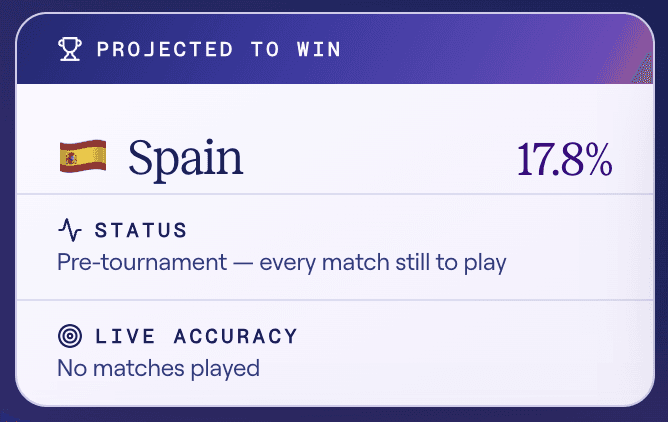
NEXUS app — captured pre-tournament
04 — THE IMPACT
This is bigger than picking a winner.
Sport is full of decisions made before the outcome is known — from performance and recruitment to pricing, sponsorship, media and inventory. NEXUS demonstrates what becomes possible when those decisions can start with a more accurate view of what is likely to happen next.